
How Should I Test Perfume Samples Before Buying a Full Bottle?
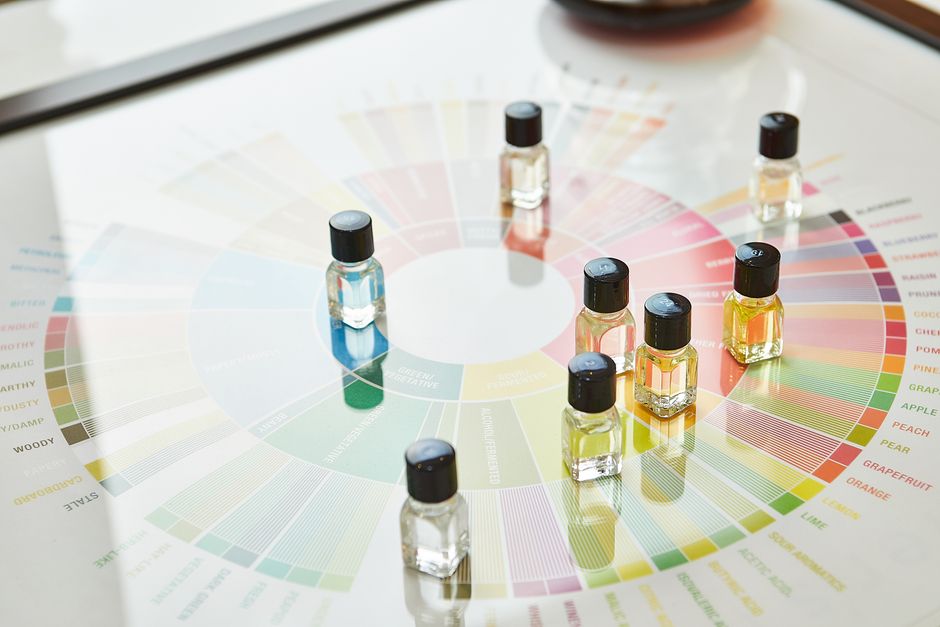
Test perfume in two stages: use blotters to reject scents quickly, then wear no more than two finalists on clean skin and judge them from the opening through the base notes. Give each candidate an extended wear test through a sample or decant, recording its development, projection, and staying power before buying a full bottle.
A perfume counter rewards speed. A good purchase rewards patience.
The useful question is not whether a scent is pleasant in the first minute. It is whether it still suits you after the bright notes leave, the middle settles, and the base remains.
How many perfumes can I test in one store visit without overwhelming my nose?
Use blotters for broad screening, but wear no more than two fragrances on skin at once and never more than three on the body. The Perfume Society gives that limit to keep the senses from becoming confused.
There is a sharper reason to keep the session small. In a controlled study of 19 untrained participants, fragrance conditions reduced odor threshold, odor discrimination, and combined smell-test performance compared with a no-fragrance condition. The study found lower performance under both a fragrance level judged appropriate and an excessive level. Your nose is not a spreadsheet. More entries do not produce a cleaner comparison.
Begin with an unscented baseline. Do not apply a new scent before leaving home. Smell a blotter once, set it aside, and write one or two plain words: citrus, green, powdery, sweet, woody, floral, or food-like. Then choose finalists.
| Stage | What to test | Limit |
|---|---|---|
| Screen | Blotters | Reject scents that fail at first smell |
| Compare | Clean skin | Two fragrances at once |
| Decide | Sample or decant wear test | One fragrance across a normal day |
Take breaks between comparisons. Coffee beans are not a universal reset: Allure reports that they can help with floral fragrances but do not help with gourmands that contain coffee-like notes. Time and an unscented setting give a cleaner reset.
Should I test perfume on skin or on a paper blotter first?
Test on a paper blotter first, then test the finalists on skin. A blotter answers one narrow question: do you want to keep smelling this perfume? Skin answers the purchase question.
Paper is useful because it lets you line up possibilities without placing every fragrance on your body. Textured card stock can work as an improvised blotter, according to Allure. Label each strip before spraying. Names disappear fast once the counter fills with scent.
Do not buy from the blotter alone. A peer-reviewed study described fragrance behavior on and above skin and on an inert vitreous-tile surface, documenting physical differences between the two. It also notes that perfumes can perform differently on different skins. Clean, dry skin provides the test condition closest to how the fragrance will live with you.
Spray one finalist on each forearm. Keep the rest of your routine unscented where possible. Do not rub your wrists together. The task is observation, not agitation.
This is the same practical discipline behind How Can I Tell If a Packaged Food Is Actually Healthy?: first impressions help, but the details decide.
How long should I wait to judge a perfume's dry-down?
Wait through the full note structure: assess the opening after 5 to 15 minutes, the middle through 2 to 4 hours, and the base at 4 to 6 hours. These are the approximate stages set out by The Perfume Society, while the International Fragrance Association describes the structure as bright top notes, structured middle notes, and long-lasting base notes.
The opening is an introduction. It is not the whole scent.
Write a small scent diary during the wear test. At the first check, note the loudest impression. At the middle check, note what remains after the opening fades. At the base check, note whether you still enjoy the scent close to the skin.
| Check-in | Record | Question to answer |
|---|---|---|
| 5 to 15 minutes | Opening notes and first reaction | Do I want to keep wearing it? |
| 2 to 4 hours | Middle notes and projection | What does it become in normal wear? |
| 4 to 6 hours | Base notes and longevity | Do I still like what is left? |
For projection, use a simple note: close to skin, noticeable at arm's length, or noticeable farther away. Do not treat projection as a contest. The best level depends on the setting: a workday, a close dinner, a commute, or time outdoors.
A study in the International Journal of Cosmetic Science compared in-home perfume testing with in-store-style first-impression sniff tests in France and the UK. Its conclusion is direct: perfume should be tested in extended use, not only for first impressions. Dry-down is where a scent earns its place.
Are decants and discovery sets worth buying before a full bottle?
Yes. Samples, decants, and discovery sets are worth buying when they give you enough wear time to judge a fragrance beyond the counter.
A discovery set works best when you want to map a house or compare several scent families. A decant works best when one scent has already passed the blotter and skin test, but has not yet passed a full day. The difference is simple: discovery sets widen the search; decants deepen it.
Give each candidate its own day. Do not test it beside a competing perfume if the aim is to learn how it fits your routine. Record the opening, middle, base, projection, and whether the scent still feels right in the places you spend time.
Build a beginner wardrobe from contrasts, not categories for their own sake. One fresh or citrus-led option can suit warmer days. One floral can test softness and lift. One woody option can test depth. One gourmand or amber-style option can test warmth. The blotter sorts the family. Skin decides the bottle.
Public data in the supplied sources does not set a price threshold for a decant or discovery set. The decision rule is clearer than a number: buy the smaller format when you need more than one wear to answer whether the base notes, projection, and longevity suit you.
Frequently Asked Questions
How can I tell whether a perfume is actually weak or I have gone nose-blind?
Reset the test with an unscented baseline and a break from smelling fragrances. A controlled study found that even low-to-moderate personal fragrance reduced odor threshold and discrimination performance, so repeated sniffing can make comparison less reliable. Return to the scent after time away and judge it at normal arm's length rather than with your nose pressed to skin.
Why does a fragrance I loved in the store smell different after a full day?
The store encounter captures only part of the fragrance. Top notes introduce the scent, middle notes give it body, and base notes provide depth over time; a full-day wear test reaches stages a counter sniff cannot. Research also documents physical differences between fragrance on skin and on an inert surface.
What scent families should a beginner sample first?
Start with contrasting options rather than a long row of similar bottles: one floral, one fresh or citrus-led scent, one woody scent, and one gourmand or amber-style scent if those appeal. Use blotters to identify the families you want to wear, then put only the best two on skin. The aim is comparison, not collecting names.
First impressions choose the next test. Extended wear chooses the bottle.
Sources
- PubMed: International Journal of Cosmetic Science, perfume testing research
- PubMed: International Journal of Cosmetic Science, fragrance on skin
- PubMed: Foods, fragrance and olfactory performance
- International Fragrance Association: How fragrance is made
- The Perfume Society: Frequently asked questions
- Allure: How to test perfume