
Why Does Perfume Smell Different on Skin Than on a Test Strip?
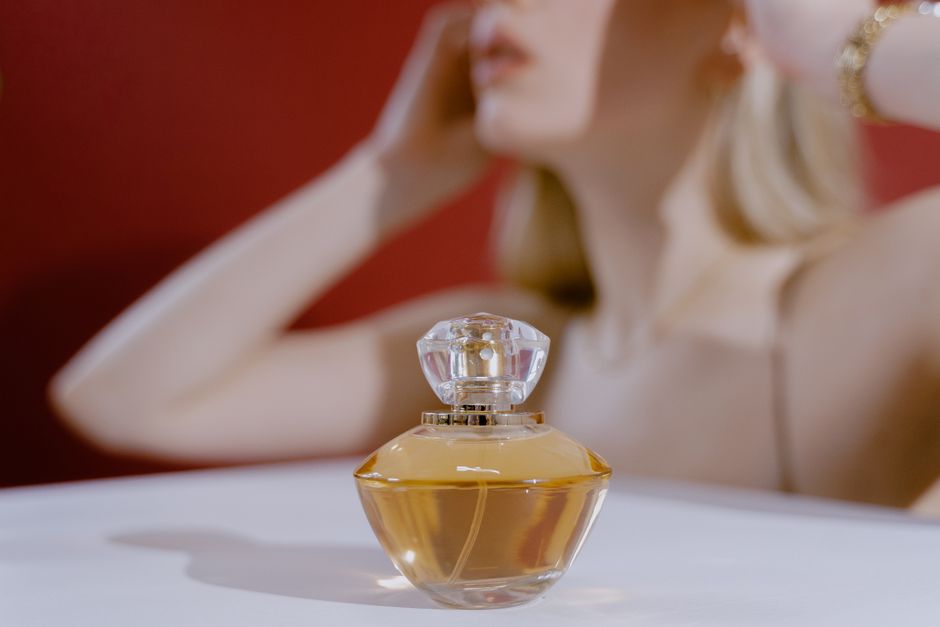
A test strip shows a perfume in open air. Skin adds warmth, moisture, surface texture, natural odor, and changing evaporation, so the same formula can smell and last differently on you. Test fragrance on clean skin, leave it alone through its opening, heart, and drydown, then judge it only after the full wear period.
Why does a perfume smell good on someone else but bad on me?
A perfume can smell good on someone else but bad on you because fragrance and body odor form an individual mixture.
A study in Psychology of fragrance use found that a perfume’s effect on body-odor pleasantness depended on the individual odor donor. In one experiment, a person’s body odor paired with their preferred perfume was rated more pleasant than the same odor paired with a randomly assigned perfume. The perfume itself is only part of the scent.
Skin scent is not fixed. Researchers at Dublin City University identify hygiene, cosmetic and fragrance use, physical activity, diet, age-related metabolic activity, gland distribution, and skin microbial flora as sources of variation. Their in-vivo work found that fragrance diffusion differed between participants over time.
That is why a glowing review and a stranger’s trail cannot settle a purchase. A strip can tell you whether the opening is unpleasant. Your skin tells you whether the blend works.
Diet belongs to this wider picture of skin scent. For a separate practical way to assess everyday food choices, see How Can I Tell If a Packaged Food Is Actually Healthy?.
Why does perfume smell different on my skin than on a paper strip?
Perfume smells different on skin than on a paper strip because paper is an inert surface, while skin is a warm, textured, changing surface that affects how scent compounds leave the formula.
Research comparing perfume on skin with an inert vitreous-tile surface found that physical interactions with skin matter to performance. The same work found low potential for skin-driven chemical transformation on clean, dry skin under non-forcing conditions. The usual change is not skin “destroying” a scent through a mysterious reaction. It is a different release pattern.
The practical distinction is simple. A blotter is a sorting tool. Skin is the wear test.
| Stage | What to assess | What to avoid |
|---|---|---|
| Opening | Whether the first impression is pleasant | Buying from the first few moments alone |
| Heart | How the scent settles and blends with your skin | Adding another fragrance to the same test area |
| Drydown | What remains close to the skin and how it feels to wear | Repeated wrist-sniffing as a test of longevity |
For a clean comparison, spray one candidate on each forearm or test different candidates on separate days. Do not rub the application site. Let the perfume sit and return to it at each stage. This separates the formula’s evolution from the rush of the first spray.
Clothing can extend the presence of a scent because it avoids some skin-driven evaporation. Spray fabric only after checking a hidden area first. Fragrance can stain, mark, or damage some materials, so skin remains the safer place to judge the perfume before purchase.
Is skin chemistry really why a fragrance changes on me?
Skin chemistry is part of the answer, but “skin pH” is too small a story.
A 2025 study of fragrance evaporation on the forearms of 10 volunteers found that individual skin properties and the fragrance compound both changed release. The factors with the strongest statistical influence were hydration, skin-surface roughness, and transepidermal water loss, or TEWL. For less-volatile, more lipophilic compounds, evaporation rose with TEWL and fell with hydration.
The study measured average forearm pH at 4.9 in women and 5.1 in men, yet its evaporation analysis points to hydration, roughness, and TEWL rather than pH alone. Its sample was small. It supports a useful rule, not an absolute rule for every perfume and every person.
Dry skin is a wear issue, not a verdict on your chemistry. Apply a plain, unscented moisturizer, allow it to settle, then test the fragrance again. If the scent still disappears before its drydown feels satisfying, choose a different fragrance rather than adding more sprays.
Test one variable at a time. Clean skin first. No scented body lotion, hair product, or other perfume. Compare that result with a moisturized-skin test on another day. The point is not to find a perfect body chemistry. The point is to find the scent’s true behavior on the skin you live in.
Frequently Asked Questions
Why can I no longer smell my perfume when other people can?
Repeated exposure can reduce your perceived intensity of an odor even while the scent remains noticeable to other people. This is known as habituation, and research also shows that longer exposure can create odor-specific reductions in sensitivity. Smelling your wrist over and over gives a poor measure of whether a fragrance is still present.
How long should I wear a perfume sample before deciding whether to buy it?
Wear it until the drydown, not only through the first spray. The sources do not set one universal number of hours because fragrance compounds and individual skin differ. Judge the opening, the heart, and the final skin scent before deciding.
Does dry skin make perfume fade faster?
Dry skin can make some fragrance compounds fade faster. A 2025 forearm study found that hydration, roughness, and transepidermal water loss influenced total fragrance evaporation, with hydration inversely related to evaporation for less-volatile, lipophilic compounds. Apply an unscented moisturizer first when dry skin is part of the problem.
A strip reveals the perfume. Skin reveals the wear.
Sources
- International Journal of Cosmetic Science: fragrance evaporation and skin properties
- International Journal of Cosmetic Science: perfume behavior on skin and inert surfaces
- Cosmetics: individual skin scent profiles after fragrance application
- Psychology of fragrance use: body odor and perfume blends
- Physiology & Behavior: habituation and adaptation to odors
- Perception & Psychophysics: long-term odor exposure and reduced sensitivity