
What Snacks Can I Prep for Kids That Travel Well?
Prep a mix of sturdy fruit, vegetables, whole-grain foods, and protein options, then match each snack to its storage needs. For perishable foods, use an insulated lunch bag with two cold sources and follow the two-hour room-temperature limit—or one hour above 90°F. Check school allergy rules, and keep nut-free choices separate from foods that could cause cross-contact.
What snacks can I make ahead for kids during a busy week?
Make-ahead snacks work best when you divide the week’s prep into shelf-stable items and perishable portions. Wash and portion produce, set aside whole-grain crackers or cereal, and plan which protein foods need refrigeration. This keeps the daily task small: choose a combination, pack it safely, and check the school rules.
MyPlate offers families and children a Healthy Snacking with MyPlate resource, along with food-preparation and meal-planning materials. Its plan for children ages 4–8 lists daily targets of 1 cup of fruit, 1½ cups of vegetables, 4 ounces of grains, 3 ounces of protein foods, and 2½ cups of dairy. These are daily targets, not a required portion for every snack.
A simple prep routine can follow three steps. At the start of the week, prepare washed produce and portion shelf-stable foods. Each evening, select a fruit or vegetable, a grain, and a protein option; chill perishable items overnight. In the morning, pack cold foods with their cold sources and keep dry foods in a separate container.
Protein does not have to mean nuts. MyPlate includes beans, peas, lentils, and eggs among protein-food equivalents, which gives caregivers alternatives when nuts are unsuitable. For more ideas on reading packaged-food information, see How Can I Tell If a Packaged Food Is Actually Healthy?
What are filling snacks kids can take to school?
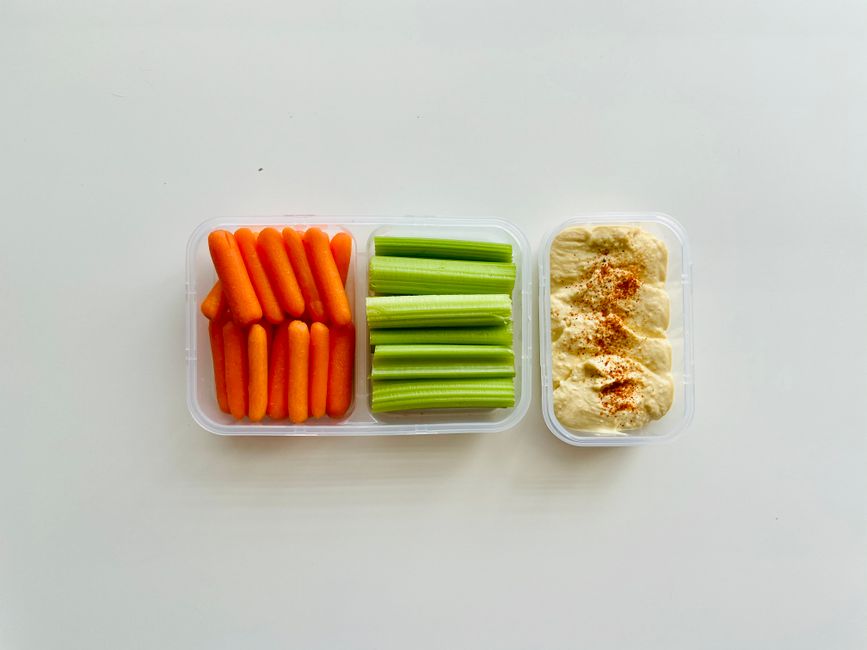
Filling school snacks pair a fruit or vegetable with a grain and a protein food, using portions that fit the child and the school’s rules. A piece of whole fruit with whole-grain crackers is one pattern; baby carrots with a suitable bean-based dip is another, if the dip can be kept cold and the school permits it.
The CDC’s parent fact sheet names whole fruit, fruit cups packed in juice or water, baby carrots, broccoli, dried fruit, low-fat whole-grain crackers, and whole-grain cereal among recommended school food options. Use those examples as building blocks rather than relying on a single snack type every day. A fruit or vegetable adds variety; the grain and protein make the pairing more substantial.
For foods covered by the fact sheet’s Tier 1 standards, packaged portions have limits of no more than 200 calories, no more than 35% of calories from total sugars, and no more than 200 mg of sodium. Those thresholds apply to the specified standards, not every food or every school policy. Check labels and local rules before packing packaged items.
Allergy rules shape the menu. CDC guidance calls for school-wide food-allergy management and coordinated practices to prevent exposure. Ask the school which foods are restricted, and follow its instructions for handwashing and cleaning surfaces. A snack can be nutritious and still be unsuitable for a particular classroom.
How can I pack snacks that will not get crushed or messy?
Pack foods by texture and storage need: firm items in a sturdy container, dry items in a separate compartment, and wet or perishable items in leak-resistant containers inside an insulated lunch bag. Keep delicate foods away from heavier containers, and avoid packing dips with crackers or cut produce unless each has a sealed container.
Food safety comes before neatness. FoodSafety.gov says perishable foods should not remain at room temperature for more than two hours, or more than one hour when exposed to temperatures above 90°F (32°C), such as in a hot car. Bacteria that cause foodborne illness grow rapidly between 40°F (4°C) and 140°F (60°C).
For perishable snacks, FoodSafety.gov recommends two cold sources, such as frozen gel packs or frozen drinks. Use an insulated lunch bag, refrigerate the packed food overnight if preparing it ahead, and put it in a refrigerator or cooler after arrival when one is available. A sealed container prevents leaks; cold sources address the separate question of temperature.
| Snack type | Examples from the sources | Packing approach |
|---|---|---|
| Shelf-stable | Whole fruit, dried fruit, whole-grain crackers, whole-grain cereal | Use a sturdy, separate container; check school rules and package directions. |
| Perishable | Foods that need to stay chilled | Use an insulated lunch bag with two cold sources; refrigerate after arrival when possible. |
| Allergy-sensitive | Nut-free choices such as fruit, vegetables, grains, eggs, or beans | Confirm school restrictions and prevent cross-contact with clean hands and surfaces. |
Frequently Asked Questions
What are good nut-free snacks for school?
Try whole fruit, fruit cups packed in juice or water, baby carrots, broccoli, dried fruit, whole-grain crackers, or whole-grain cereal. Eggs, beans, peas, and lentils are protein-food options listed by MyPlate. Check the school’s rules and ingredient labels, and prevent cross-contact during preparation.
How long can homemade snacks stay in a lunch bag?
FoodSafety.gov says perishable foods can stay at room temperature for no more than two hours, or one hour when temperatures are above 90°F (32°C). Pack perishable snacks in an insulated lunch bag with two cold sources and refrigerate them after arrival when possible.
How can I prep snacks that do not need refrigeration?
Choose shelf-stable options such as whole fruit, dried fruit, whole-grain crackers, or whole-grain cereal, while checking the package and school rules. Pack them separately from chilled foods so their storage needs stay clear.
Sources
- FoodSafety.gov: Get Food Safety for the School Year
- FoodSafety.gov: Food Safety by Events and Seasons
- U.S. Department of Agriculture MyPlate: Print Materials
- Centers for Disease Control and Prevention: Voluntary Guidelines for Managing Food Allergies in Schools
- Centers for Disease Control and Prevention: Nutrition Facts for Parents
You may also like
Are Food Trucks Right for a Wedding Reception?
Plan a wedding food-truck setup with practical guidance on truck count, service speed, portions, seating, venue access, and backup plans.
How Can I Batch-Cook Complete Meals That Freeze and Reheat Well?
Batch-cook complete meals that freeze well with practical portioning, packaging, cooling, thawing, and reheating guidance.