
Best Toyotas for Snow: Choose by Roads, Traction and Budget
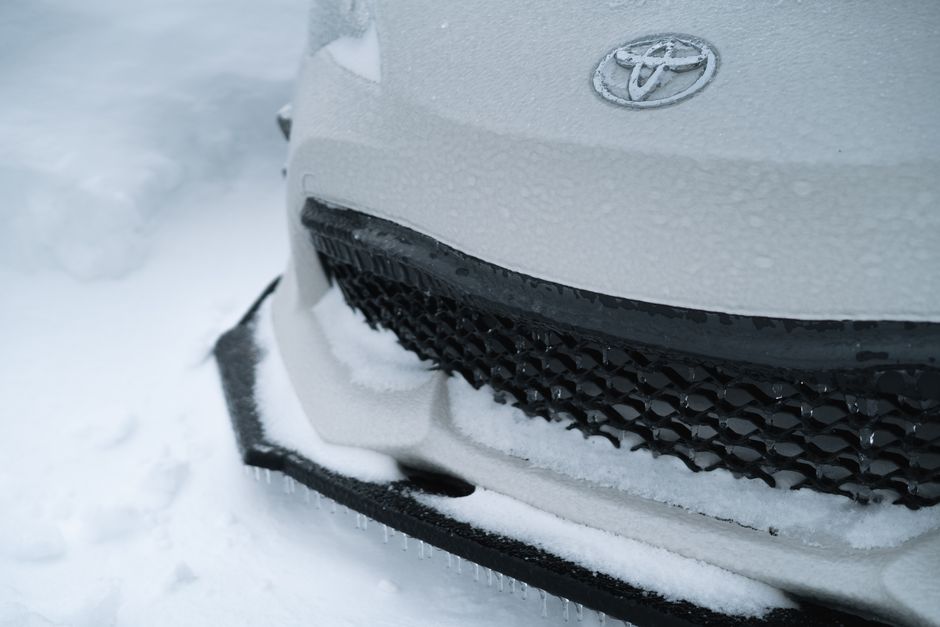
The best Toyotas for snow depend on your roads: a RAV4 AWD or Highlander AWD fits plowed commutes, while a 4Runner with 4WD suits steep routes and rougher snow. For deeper snow, compare ground clearance and 4WD capability, not size alone. Across every model, winter tires matter for braking and cornering; AWD or 4WD mainly helps deliver power to the wheels when moving.
Which Toyota handles snow best: the RAV4, Highlander, 4Runner or Sequoia?
For ordinary plowed roads, a RAV4 AWD or Highlander AWD is the practical starting point; for steep routes or difficult snow, the 4Runner’s available 4WD hardware is more purpose-built. The Sequoia adds passenger space and available 4WD, but its size alone does not prove superior snow braking or handling.
The 2025 RAV4 gas models are available with FWD or AWD. Toyota reports that every 2025 RAV4 Hybrid has standard Electronic On-Demand AWD, with a separate electric motor at the rear wheels sending power to all four wheels when needed. Toyota describes the hybrid as suited to commuting and light off-roading, and lists a starting MSRP of $28,850 for the gas LE FWD—not an AWD price. See Toyota’s 2025 RAV4 specifications when comparing trims.
The 2025 Highlander gas model is available with front-wheel drive or AWD. Toyota describes it as a midsize SUV with car-like handling and seating for up to eight, which can suit families who drive mostly on cleared roads. The source does not provide evidence that AWD improves winter braking, so evaluate tires and conditions separately.
The 2025 4Runner is offered with 2WD, part-time 4WD or full-time 4WD, depending on configuration. Toyota reports a starting MSRP of $40,770 plus $1,450 delivery, processing and handling; 4WD models have high and low range and Active Traction Control. The 2025 Sequoia is available with rear-wheel drive or 4WDemand part-time 4WD. Its brochure lists minimum ground clearance of 8.6 inches for most grades and 9.1 inches for TRD Pro, and describes seating for seven or eight.
| Option | Who it suits | Published cost | Key limitation |
|---|---|---|---|
| RAV4 gas AWD | Commuters who want a compact SUV option with available AWD | AWD price not published; gas LE FWD starts at $28,850 MSRP | Not presented as a deep-snow or steep-route specialist |
| RAV4 Hybrid AWD | Commuters seeking standard AWD in the hybrid range | Not published | Described for everyday commuting and light off-roading |
| Highlander AWD | Families needing up to eight seats on primarily plowed roads | Not published | Source does not establish improved winter braking from AWD |
| 4Runner 4WD | Drivers facing steep, difficult routes who need available low range | Starts at $40,770 MSRP plus $1,450 delivery, processing and handling | Available configurations differ; price is a starting figure |
| Sequoia 4WD | Drivers prioritizing seven- or eight-seat capacity and available 4WD | Not published | Size and 4WD do not establish better snow braking or handling |
Is a Toyota with AWD safer in snow than a front-wheel-drive model with winter tires?
Not automatically: AWD can help with acceleration, while winter tires provide grip for starting, braking and cornering. The supplied sources do not show that AWD alone makes a Toyota safer in winter than a front-wheel-drive vehicle equipped with winter tires.
Transport Canada tested a 21-passenger minibus on snow. With winter tires at all wheel positions, it stopped an average of 5.6 meters shorter from 80 km/h than with all-season tires at the front and winter tires at the rear. In a snow cornering test, the all-winter-tire setup averaged 40.6 km/h versus 36.3 km/h for the mixed setup. The vehicle on front all-season tires also could not follow the prescribed high-speed slalom path and hit cones; with winter tires at all positions, it followed the path.
Those results come from a minibus test, not a Toyota model comparison, so they do not quantify a particular Toyota’s performance. They do show why a drivetrain decision and a tire decision should be treated as separate checks. Transport Canada supports winter tires bearing the mountain-snowflake symbol on all wheel positions during winter. For practical budgeting, compare the AWD or 4WD trim against the cost of a full set of suitable tires rather than treating traction hardware as a tire replacement.
Which Toyota is best for steep, icy roads and deep snow?
Among these options, the 4Runner with 4WD is the clearest fit for steep, difficult routes because Toyota lists low-range gearing and traction features on 4WD models. That equipment can help manage difficult low-speed travel, but it does not eliminate the need for winter tires or prove better stopping grip on ice.
Toyota says 4WD 4Runner models have a two-speed transfer case with high and low range plus Active Traction Control. TRD Off-Road, TRD Pro and Trailhunter grades include a locking rear differential. Available CRAWL Control manages low-speed off-road movement, and Downhill Assist Control helps manage speed on descents. Toyota’s 2025 4Runner overview lists a starting MSRP of $40,770 before $1,450 delivery, processing and handling.
The Sequoia is another available 4WD option, and its TRD Pro includes a locking rear differential, Multi-Terrain Select, Crawl Control and Downhill Assist Control. Its larger body and seven- or eight-seat layout may suit passenger or cargo needs, but the provided Sequoia information does not establish that it handles snow better than the 4Runner. When deep snow is the concern, use the published clearance figures and drivetrain configuration as filters, then consider the route and tire setup.
Decision matrix: For frequent plowed commutes and tighter budget control, compare RAV4 gas AWD trims; for hybrid AWD, compare RAV4 Hybrid pricing and features. For family seating on cleared roads, consider Highlander AWD. For recurring steep or difficult routes, assess 4Runner 4WD and the equipment on its specific grade. For seven or eight seats with available 4WD, evaluate Sequoia while accounting for its published clearance and the limits of the available handling data.
How much ground clearance do I need for snowy roads?
Choose enough clearance for the snow depth and ruts you regularly encounter, but the supplied sources do not provide a universal clearance threshold for winter roads. They provide a concrete Sequoia reference: 8.6 inches minimum for most 2025 grades and 9.1 inches for TRD Pro.
Clearance is a different question from tire grip. A vehicle may have enough space beneath it for a snow-covered road and still need winter tires to brake and corner effectively. The Sequoia figures come from Toyota’s 2025 Sequoia eBrochure; equivalent clearance figures for the RAV4, Highlander and 4Runner are not included in the research provided here, so compare official specifications for the exact trim rather than assuming.
Before winter, use this readiness checklist:
- Confirm tire type and condition. Check whether the vehicle has winter tires with the mountain-snowflake symbol on all wheel positions and inspect tread condition.
- Check chain fitment. Read the owner’s manual for chain compatibility and any placement or use instructions for the exact vehicle and tire setup.
- Match clearance to the route. Consider plowing, ruts and expected snow depth; do not treat AWD as extra ground clearance.
- Practice smooth inputs. Use gentle acceleration, braking and steering in a safe, low-risk area to learn how the vehicle responds on slippery surfaces.
If you are balancing the purchase against other ownership costs, compare the winter-capable options with this guide to choosing the right Toyota for your budget. The useful next step is specific: identify your usual road conditions, then check the trim’s drivetrain, clearance, tire setup and manual before choosing.
Frequently Asked Questions
Are Toyota hybrid AWD systems effective in winter?
The 2025 RAV4 Hybrid has standard Electronic On-Demand AWD, which uses a separate rear electric motor to send power to all four wheels when needed. That supports traction when accelerating, but the provided sources do not establish better winter braking or cornering; winter tires remain important.
Which Toyota is a good choice for snow on a budget?
The 2025 RAV4 gas lineup has the clearest published entry price in these sources: the LE FWD starts at $28,850 MSRP, and gas models are available with AWD. That price is for the FWD LE, so the AWD price is not published here; compare the actual AWD trim price and tire costs before deciding.
Do winter tires make a bigger difference than AWD on a Toyota?
They address different jobs: AWD can help a vehicle get moving, while tires affect grip during acceleration, braking and cornering. Transport Canada’s minibus test found a winter-tire setup stopped an average of 5.6 meters shorter from 80 km/h than a mixed setup, illustrating why drivetrain alone is not a substitute for suitable tires.
Sources
You may also like

Best Toyotas to Buy: Choose the Right Model for Your Budget
The best Toyotas to buy depend on your budget, driving pattern, and space needs: compare Corolla, Prius, Camry, RAV4, and Highlander.
Best Toyotas for Gas Mileage: Choose the Right Efficient Model
The 2025 Prius leads Toyota fuel economy at up to 57 mpg combined; compare drivetrain, real-world driving, and hybrid costs before choosing.
Best Toyotas to Buy Used: Choose by Need, Cost, and Risk
Choose the best used Toyota by your needs, then verify its year, records, recalls, and condition before paying a premium.
Should I Repair, Rebuild, Replace, or Replace My High-Mileage Car?
A practical framework for comparing engine repair, replacement, rebuild, and vehicle replacement costs before you authorize work.