
Best Toyotas for Gas Mileage: Choose the Right Efficient Model
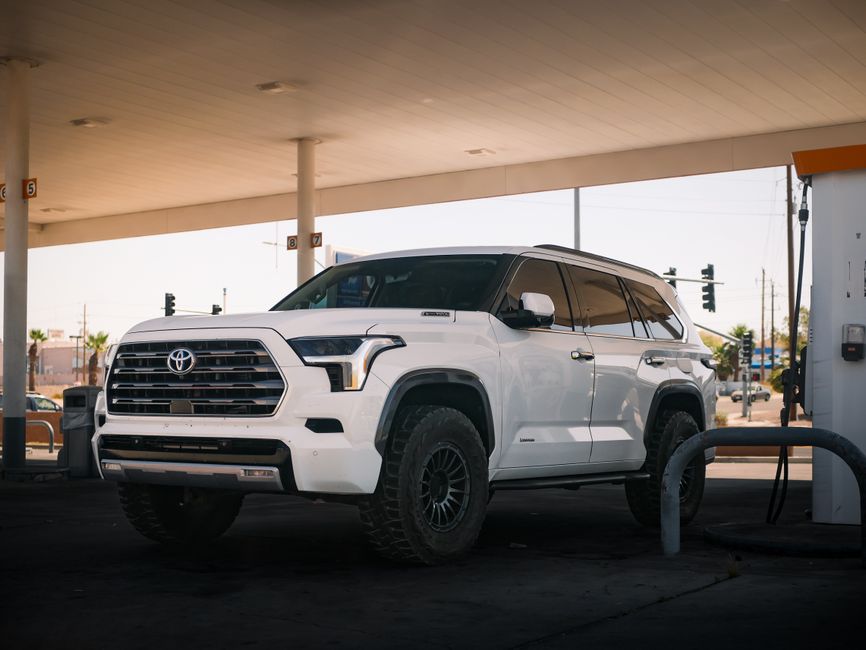
The best Toyotas for gas mileage in the 2025 lineup are hybrids: the Prius leads at up to 57 mpg combined, followed by the Corolla Hybrid at 50 mpg and Camry Hybrid LE at 51 mpg in front-wheel drive. Choose by driving pattern and space, not rank alone: compare equivalent trims, drivetrain, real-world speed and weather, then calculate fuel savings against the hybrid’s purchase-price difference.
Which Toyota model gets the best gas mileage?
The 2025 front-wheel-drive Prius gets the best gas mileage in this lineup, with an EPA rating of 57 mpg combined. The AWD Prius reaches up to 54 mpg combined, so the drivetrain choice changes the result.
Here is the comparable EPA snapshot from the U.S. Department of Energy and EPA’s 2025 Toyota fuel-economy data. Figures are maximum ratings for the stated model and configuration; trim and drivetrain matter.
| 2025 option and drivetrain | City / highway / combined MPG | Best fit | Key limitation |
|---|---|---|---|
| Prius, front-wheel drive | 57 / 56 / 57 | Highest combined rating in this comparison | AWD versions reach up to 54 combined |
| Corolla Hybrid, front-wheel drive | 53 / 46 / 50 | Compact sedan shoppers prioritizing efficiency | AWD versions reach up to 48 combined |
| Camry Hybrid LE, front-wheel drive | 53 / 50 / 51 | Shoppers comparing a midsize hybrid sedan | AWD LE is rated at 50 combined |
| Crown 2.5-liter hybrid, AWD | 42 / 41 / 41 | Shoppers considering an AWD hybrid | Lower combined rating than the Prius, Corolla Hybrid, or Camry Hybrid |
| Crown Signia, AWD | 39 / 37 / 38 | Shoppers considering the Signia configuration | Lower combined rating than the Crown 2.5-liter hybrid |
| Corolla, non-hybrid automatic | 32 / 41 / 35 | Comparing a non-hybrid compact sedan | Lower combined rating than the Corolla Hybrid |
Think of the ranking as a starting filter. If you drive mostly in town, compare city ratings; if your routine is dominated by faster highway travel, highway figures and your cruising speed deserve more attention. A higher combined figure does not guarantee the best fit for cargo, passenger space, or the specific drivetrain you need. EPA figures are estimates; actual mileage will vary.
Is a Toyota Corolla or Camry better for fuel economy?
The Corolla Hybrid is rated at up to 50 mpg combined, while the Camry Hybrid LE front-wheel-drive is rated at 51 mpg combined, so the Camry has a one-mpg advantage in those specific 2025 configurations. The answer changes if you compare a non-hybrid Corolla: its automatic version is rated at up to 35 mpg combined.
Compare like with like before deciding. The headline Corolla Hybrid figure is for its most efficient version; AWD Corolla Hybrid models reach up to 48 mpg combined. For the Camry, the 51-mpg rating is for the front-wheel-drive LE, while AWD LE is rated at 50 mpg combined. Check the exact trim and drivetrain on the window sticker rather than assuming every version shares the top rating.
The non-hybrid Corolla gives shoppers a clear efficiency-versus-upfront-cost question, but the provided sources do not publish purchase prices for these configurations. Estimate fuel expense using your inputs: annual miles divided by the combined MPG you expect, multiplied by your local price per gallon. For example, set the same annual mileage and gas price for both cars, calculate each annual fuel bill, then compare the difference with the actual price difference between comparable trims. That difference determines how long fuel savings would take to offset the hybrid’s added cost; without prices and your driving inputs, a break-even mileage cannot be stated responsibly.
Which Toyota has the least problems while still getting good gas mileage?
The provided evidence cannot identify a single Toyota model or model year with the fewest problems; it supports Toyota’s brand-level reliability standing, not a model-specific winner. Consumer Reports ranks Toyota No. 1 for new-car reliability and No. 2 for used-car reliability, based on problems reported by members in Auto Surveys covering more than 300,000 vehicles.
That is useful screening evidence, not a guarantee. Consumer Reports says its predicted reliability forecasts how a new model will hold up based on member-reported problems; a brand ranking does not establish that a particular Prius, Corolla Hybrid, Camry Hybrid, or used model will have the fewest issues. For a specific purchase, use the exact model year and vehicle condition as the decision unit, and avoid treating MPG as a reliability proxy.
Which Toyota car is the most fuel-efficient?
The 2025 Prius front-wheel-drive model is the most fuel-efficient Toyota car among the listed options, at up to 57 mpg combined. The Corolla Hybrid and Camry Hybrid LE follow closely in their listed front-wheel-drive configurations, at 50 and 51 mpg combined.
Real-world results can shift that order’s practical importance. Federal fuel-economy guidance explains that cold starts, cabin heating, denser cold air, tire pressure, winter gasoline, and reduced battery performance can all lower winter mileage. In its cited test conditions, hybrid losses can be about 30% to 34%; the broader typical ranges are 20% to 40% in city driving and 25% to 45% on short trips. Those are general cold-weather findings, not a prediction for every Toyota or every driver.
Speed is another controllable variable. In AAA Automotive Research Center steady-speed tests, the tested Prius returned 58.1 mpg at 60 mph, 54.8 at 65 mph, 47.5 at 70 mph, and 41.9 at 80 mph. AAA notes that EPA highway testing includes a drive cycle with a maximum speed of 60 mph, while drivers may travel faster. The practical takeaway: use the EPA rating to compare cars under a shared benchmark, then budget with the speed and trip pattern you actually expect.
For a decision by use case, start with the constraint that matters most: city commuting points toward the Prius or Corolla Hybrid’s strong city ratings; mixed sedan use makes the Corolla Hybrid and Camry Hybrid close comparisons; AWD shoppers should compare the exact AWD rating; and cargo or family-space decisions require checking vehicle specifications not supplied in this fuel-economy data. Four-wheel drive can reduce fuel economy, and added cargo weight, roof racks, towing, or aggressive driving can lower it further, according to federal guidance. The supplied figures do not include 2025 RAV4 Hybrid or Venza ratings, so those models cannot be ranked on this table without additional source data.
Frequently Asked Questions
Which non-hybrid Toyota gets the best MPG?
Among the non-hybrid Toyota options with figures in the provided 2025 data, the Corolla automatic leads at up to 35 mpg combined, with 32 city and 41 highway. The Prius, Corolla Hybrid, and Camry Hybrid have higher combined ratings, but they are hybrids.
How much does real-world MPG differ from a Toyota's EPA rating?
There is no single fixed difference: actual mileage varies with speed, trip length, weather, driving style, and route mix. AAA’s tested Prius returned 54.8 mpg at 65 mph and 41.9 mpg at 80 mph, while EPA ratings are estimates rather than guarantees.
Does winter weather or highway speed reduce Toyota hybrid gas mileage?
Yes. Federal guidance reports that hybrids can lose about 20% to 40% in city driving and 25% to 45% on short trips under cold-weather conditions. AAA testing also found the Prius’s mileage fell as steady speed rose, from 58.1 mpg at 60 mph to 41.9 mpg at 80 mph.
Sources
- U.S. Department of Energy and U.S. Environmental Protection Agency, 2025 Toyota fuel economy
- U.S. Department of Energy and U.S. Environmental Protection Agency, Cold Weather
- U.S. Department of Energy and U.S. Environmental Protection Agency, Factors That Affect Fuel Economy
- AAA Automotive Research Center, Relationship Between Speeding and Fuel Economy
- Consumer Reports, Toyota Reliability
You may also like

Best Toyotas to Buy: Choose the Right Model for Your Budget
The best Toyotas to buy depend on your budget, driving pattern, and space needs: compare Corolla, Prius, Camry, RAV4, and Highlander.

Best Toyotas to Buy Used: Choose by Need, Cost, and Risk
Choose the best used Toyota by your needs, then verify its year, records, recalls, and condition before paying a premium.

How Do I Choose a Reputable Detailer for Paint Correction and Ceramic Coating?
A practical checklist for comparing paint-correction and ceramic-coating detailers, quotes, guarantees, and preparation standards.

Should I Repair, Rebuild, Replace, or Replace My High-Mileage Car?
A practical framework for comparing engine repair, replacement, rebuild, and vehicle replacement costs before you authorize work.