
Best Toyotas for Off-Roading: Match the Truck to the Trail
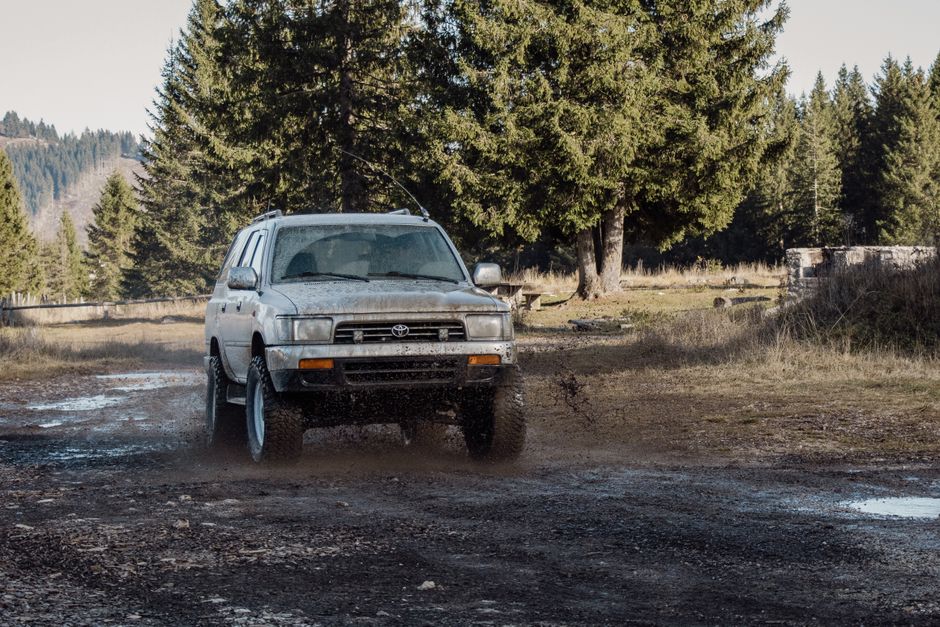
The best Toyotas for off roading depend on the load and trail: choose a 4Runner TRD Off-Road for a capable SUV with low range and a standard rear locker, a Tacoma for pickup utility and gear flexibility, or a Land Cruiser for full-time four-wheel drive and standard center and rear lockers. The Tacoma starts at the lowest listed price; the Land Cruiser brings the broadest standard driveline equipment.
Which Toyota is best for serious off-roading: the 4Runner, Tacoma, or Land Cruiser?
The 4Runner suits a trail-focused SUV buyer, the Tacoma suits drivers who need a pickup bed, and the Land Cruiser suits buyers who want full-time four-wheel drive with both center and rear locking differentials as standard. There is no single winner across rock crawling, desert driving, and overlanding because equipment, cargo, and price pull in different directions.
For difficult, slow trails, all three have credible evidence behind them. MotorTrend reported that stock 2025 4Runner TRD Off-Road, Tacoma Trailhunter, and Land Cruiser models completed Moab’s Hell’s Revenge. Drivers aired down their tires and used 4-Low; they still had to choose lines carefully to protect underbody armor, fascias, and trailer hitches.
The 2026 4Runner four-wheel-drive variants have a two-speed transfer case with high and low range. Toyota makes the electronic rear differential lock standard on TRD Off-Road, TRD Pro, and Trailhunter. The Land Cruiser goes further in standard driveline equipment: both grades include full-time four-wheel drive, a two-speed transfer case, and center and rear locking differentials. Its front stabilizer disconnect is available, not standard.
The Tacoma’s equipment depends more on trim and options. Toyota lists an available electronic locking rear differential, while the Stabilizer Disconnect Mechanism is available on TRD Off-Road and standard on TRD Pro and Trailhunter. Front recovery hooks and underbody protection are standard throughout the lineup; TRD Pro and Trailhunter add rear recovery points and protection. See Toyota’s 2026 Tacoma specifications for configuration details.
For desert driving, the choice turns on the exact tire, suspension, load, and configuration rather than a universal model ranking; the supplied sources do not provide comparative high-speed desert test results. The Tacoma TRD Pro and Trailhunter have 33-inch tires, and Toyota lists adjustable FOX shocks on TRD Pro and Old Man Emu shocks on Trailhunter. The 4Runner Trailhunter has 33-inch Toyo tires and Old Man Emu shocks. These trims bring more specialized hardware, but their equipment does not remove the need to check clearance and payload.
Is a Toyota 4Runner or Tacoma better for rock crawling and narrow trails?
The 4Runner is the more straightforward pick when you want SUV cargo space with a rear locker on the TRD Off-Road; the Tacoma is the better fit when a pickup bed matters and you can accept trim-specific equipment and payload limits. Both can crawl difficult routes in stock form, but obstacle clearance and line choice can decide whether the trip stays clean.
Low range is central to controlled climbing. MotorTrend notes that low range in first gear multiplies engine torque by about 40, helping the driver climb steep grades slowly. Its Moab test showed that rear lockers and anti-roll-bar disconnects were not required for the tested vehicles to complete the trail, though those features remain useful tools rather than guarantees of success.
Ground clearance and approach geometry differ by trim. Car and Driver measured 8.7 inches of clearance for the Land Cruiser and 9.1 inches for the 4Runner TRD Off-Road; the breakover angles were 23 and 24 degrees. The tested 4Runner’s air dam reduced its approach angle to 19 degrees, while the source reports 33 degrees for the 4Runner TRD Pro and Trailhunter. These are 2025 comparison measurements, so verify current model-year specifications before buying.
Tires also shape the usable margin. The Drive reported that its Tacoma TRD Off-Road used 31.6-inch all-terrain tires, while the TRD Pro and Trailhunter used larger, more aggressive tires and more underbody armoring. On a narrow trail, larger tires and protection can help, but the tested vehicles still needed careful lines around obstacles and vulnerable bodywork.
Which Toyota off-road model gives you the most capability for the money?
The Tacoma has the lowest 2026 starting price among these three, at $32,145 before delivery and handling; the 4Runner starts at $41,570 plus $1,450 delivery, and the Land Cruiser starts at $57,200. Price alone does not settle value: compare the specific trim’s standard equipment, required options, and cargo needs.
The entry price buys different things. Tacoma buyers get a pickup format, standard front recovery hooks and underbody protection, and a maximum payload of up to 1,705 pounds across configurations. That figure is a lineup maximum, not a promise for every trim. Its maximum towing capacity is up to 6,500 pounds, also configuration-dependent.
The 4Runner costs more to enter, but a TRD Off-Road includes the electronic rear locker and four-wheel-drive models have low range. Toyota lists maximum towing at 6,000 pounds. The Land Cruiser starts highest, yet both grades include full-time four-wheel drive and center and rear lockers; it also has a 326-hp, 465-lb-ft hybrid powertrain and a 23-mpg combined EPA estimate.
Use the table as a shortlist, not as a substitute for a trim-level quote. MSRP and equipment change by configuration, and the 2025 measurements below are historical comparison data rather than 2026 pricing.
| Option | Who it suits | Cost | Key limitation |
|---|---|---|---|
| 2026 Tacoma | Drivers needing pickup-bed utility; lineup maximum payload up to 1,705 lb | Starts at $32,145 before delivery and handling | Payload varies by configuration; one tested Trailhunter was reported at about 1,100 lb |
| 2026 4Runner TRD Off-Road | SUV buyers who want low range and a standard rear locker on this trim | 4Runner starts at $41,570 plus $1,450 delivery | Approach angle and clearance depend on trim; the TRD Off-Road air dam reduced approach angle in a 2025 test |
| 2026 Land Cruiser | Drivers seeking full-time 4WD and standard center and rear lockers | Starts at $57,200 | Measured clearance was 8.7 inches in a 2025 comparison; check current specifications |
Is the Land Cruiser worth paying more for than a 4Runner if I mainly drive trails?
The Land Cruiser earns its higher starting price when its standard full-time four-wheel drive, center and rear lockers, and hybrid powertrain match the buyer’s priorities; for trail use alone, the 4Runner TRD Off-Road can deliver key equipment for less. The choice depends on whether the Land Cruiser’s standard package or the 4Runner’s trim range better fits the route and budget.
Both models completed the same difficult Moab trail in the MotorTrend report. The Land Cruiser had lower measured ground clearance and breakover angle than the 4Runner TRD Off-Road in Car and Driver’s 2025 comparison, but the tested 4Runner air dam also reduced its approach angle. Trail performance cannot be reduced to one clearance figure: the body shape and the driver’s line matter.
The 4Runner also offers more off-road-focused trim choices, including TRD Pro and Trailhunter. Those grades add equipment such as 33-inch tires and specialized shocks; Trailhunter also includes an onboard air compressor and ARB roof rack. The Land Cruiser answers with standard driveline hardware across both grades, while its higher grade adds Multi-Terrain Select and Multi-Terrain Monitor.
Before choosing, check five things on the exact vehicle: four-wheel-drive system and low range; locking differentials and whether they are standard or optional; stabilizer disconnect availability; tire size and underbody protection; and payload after passengers, accessories, and cargo. For overlanding, compare usable payload against the loaded gear plan before comparing roof or bed space. If your priority is changing vehicles or setting up a project, see Best Toyotas to Modify: Choose the Right Project.
Frequently Asked Questions
Which Toyota is better for overlanding when I need to carry camping gear?
A Tacoma provides an open bed for gear, while a 4Runner or Land Cruiser keeps cargo enclosed. Check the exact vehicle’s payload before loading: a Moab test reported about 1,100 pounds for the Tacoma Trailhunter, and passengers count against that capacity. Toyota lists the Land Cruiser’s available roof carrying capacity as up to 165 pounds while driving and 770 pounds while parked.
Do I need a TRD Pro or Trailhunter, or is a TRD Off-Road trim capable enough?
A TRD Off-Road can be capable enough for demanding trails in stock form: MotorTrend reported that a 4Runner TRD Off-Road, Tacoma Trailhunter, and Land Cruiser completed Hell’s Revenge. TRD Pro and Trailhunter add equipment such as larger tires and, on both the Tacoma and 4Runner, a standard stabilizer disconnect mechanism. Choose by the equipment you need and the vehicle’s payload, not the trim name alone.
Which stock Toyota can handle difficult trails without modifications?
MotorTrend reported that stock 4Runner TRD Off-Road, Tacoma Trailhunter, and Land Cruiser models completed Moab’s difficult Hell’s Revenge trail. The drivers aired down the tires and used 4-Low, and the report cautioned that clearance remained limited on obstacles. Stock capability still depends on the exact trim, careful line choice, and trail conditions.
Sources
You may also like

Best Toyotas Under 10k: Choose the Right Used Model
Best Toyotas under 10k include the Corolla, Camry, Prius, or RAV4, chosen by need and verified against local prices and condition.

Best Toyotas to Modify: Choose the Right Project
The best Toyotas to modify depend on your build goal, parts availability, and the condition of the car.
Best Toyotas for Snow: Choose by Roads, Traction and Budget
The best Toyotas for snow range from AWD crossovers for plowed roads to 4WD SUVs for steep routes, with winter tires essential for grip.
Should I Repair, Rebuild, Replace, or Replace My High-Mileage Car?
A practical framework for comparing engine repair, replacement, rebuild, and vehicle replacement costs before you authorize work.