
How Can Corporate Event Teams Create Useful, Interactive Networking Experiences?
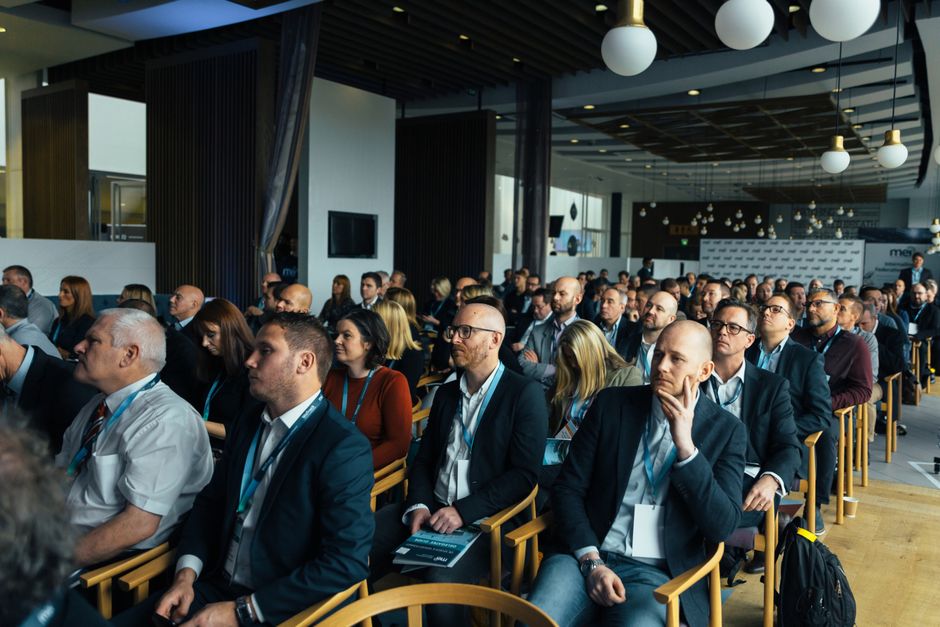
Create networking around a shared work problem, a useful skill, or a clear business outcome, then give people a structured reason to talk. Choose hands-on work, peer discussion, expert access, or a guided activation based on the event goal. Measure participation, connections, feedback, and the action that follows. Entertainment can support the room; it cannot carry the purpose.
What makes a corporate event feel worth attending?
A corporate event feels worth attending when attendees can point to a useful exchange, a new idea, or a next conversation that fits their work.
That standard changes the planning question. Do not ask which diversion fills a gap in the agenda. Ask what an attendee should be able to do, know, or move forward by the time they leave.
PCMA Convene's report on the 2024 Freeman attendee survey offers a hard signal. In a November 2023 survey of nearly 2,100 recent business-event attendees, immersive experiences were the most often selected positive event factor at 64%. Demonstrations and hands-on activities were the preferred in-person learning format for three-quarters of respondents.
Immersion is not decoration alone. A useful activation puts an attendee inside the subject: testing a process, comparing choices, solving a live problem, or seeing a product work. The room becomes part of the learning.
Match the format to the job. Employee recognition calls for a shared contribution that makes colleagues visible to one another. Client retention calls for candid problem-solving with people facing related decisions. Lead generation calls for a demonstration followed by a clear route to a relevant conversation. One event can serve several aims, but one activation needs one primary purpose.
| Primary goal | Useful interactive format | What to track |
|---|---|---|
| Client retention | Peer discussion around a shared challenge with expert access | Meetings held, return conversations, attendee sentiment |
| Employee recognition | Hands-on team contribution or knowledge exchange | Participation, feedback, advocacy |
| Lead generation | Product demonstration tied to a specific use case | Qualified interactions, leads, follow-up activity |
| Learning | Workshop, demonstration, or small-group practice | Participation, poll responses, sessions attended |
The table is a planning tool, not a promise. Public research does not set a universal participation threshold for every corporate event. It does show that the measure should fit the reason people came.
PCMA's Return on Events research gives teams five lenses: operations, investment, participation, experience, and the combined return on event. That keeps a pleasant room from being confused with a successful one.
How can we get attendees to network without awkward icebreakers?
Give attendees a shared task and a defined route to the right people, rather than asking them to manufacture a conversation from a badge and a drink.
Purpose removes the burden from personality. Before the event, collect a small amount of useful information: a challenge the person faces, a topic they can help with, and a topic they want to learn. Use it to form small discussions or suggested introductions. State the reason for each match.
The preference data is clear. PCMA Convene reports that 52% of surveyed attendees selected meet-ups with people facing similar professional challenges as a positive networking factor, and 44% selected topic-specific meet-ups. Speed meet-ups drew 8%; mentor and mentee sessions drew 13%.
This does not mean every timed conversation fails. It means the clock needs a purpose. A 15-minute exchange between two people who have a relevant problem and a relevant skill is different from a rapid round of generic introductions.
A 2014 eLife study describes this form of matching at a 40-person interdisciplinary meeting. Organizers used delegates' familiarity with methods and learning needs to create pairs, excluding prior collaborators in the first round. More than half of questionnaire respondents said the second matching round led to new collaborations.
Use the same sequence in a corporate setting. Publish the discussion theme. Make a short prompt visible. Place people in groups small enough for each voice to enter. Leave time for them to choose a next step: exchange details, book a follow-up, or join a later session.
Career-minded guests often treat a good introduction as part of their working life, not as a social extra. That practical view also shapes decisions such as whether English alone can support a job search in Norway. The useful question is always the same: who can help with the work in front of me?
Conversation is the product. The reception is the container.
Which interactive activities work for a corporate event audience?
The activities that work are the ones that turn the event goal into a visible action: make, test, discuss, compare, or connect with a person who has relevant knowledge.
Hands-on workshops work when attendees need to practise a skill or explore a decision. Keep the task close to the work they do. A broad craft exercise can create a pleasant break, yet it does not automatically create a useful professional exchange.
Peer roundtables work when the room holds people with related challenges. Set a specific question, assign enough time for each person to speak, and capture the next question or next meeting. Research from Northwestern University and the Research Corporation for Science Advancement found that participants who later formed new collaborations had 63% more total effective interaction time than pairs who did not. Assignment to a higher-interaction scenario was associated with more than an eightfold increase in the odds of later collaboration.
Expert stations work when attendees need informed answers. PCMA Convene reports that 81% of respondents ranked speaking with experts as important to networking success. Put the expert near a practical demonstration or case prompt so the discussion starts with substance.
Gamification has a narrower role. Use it when the game directs people toward the intended action, such as visiting a demonstration, contributing an answer, or completing a useful introduction. Do not make points the goal. The point should reveal the work.
Experiential activations work when they make a product, challenge, or point of view tangible. The 2024 Freeman findings place immersive experiences above after-hours events, games, and wellness opportunities among positive event factors. Build the activation around the thing people need to understand, not around a theme that could sit in any room.
Plan the after-event path before doors open. An anonymized Swapcard study summarized by PCMA Convene found that 8% of lead-generating interactions occurred after an event and that fewer than 15% of exhibitors downloaded final lead reports within 10 days. A useful activation leaves a trace: a requested meeting, a saved resource, a follow-up discussion, or a recorded connection.
The best event activity is not the loudest one. It is the one that gives a person a better next conversation.
Frequently Asked Questions
How do we choose an event activation that supports our business goal?
Start with the business outcome, then name the attendee action that supports it. A client-retention event can use peer problem-solving and expert access; a lead-generation event can use product demonstrations and tracked follow-up. PCMA's Return on Events framework separates operational, financial, participation, and experience outcomes, so attendance alone does not become the score.
How can we measure whether attendees were engaged at an event?
Measure the action the activation asks people to take: workshop participation, meetings held, connections made, poll responses, feedback, lead activity, or post-event follow-up. Freeman identifies connections, meetings, and networking participation as useful networking measures. Pair those counts with attendee sentiment and the business action that follows, such as a proposal, return meeting, or lead report download.
Sources
- PCMA Convene: What Event Attendees Want Now
- eLife: Network-based pairing at an interdisciplinary scientific meeting
- Northwestern University and Research Corporation for Science Advancement: Conference interaction and collaboration study
- PCMA Convene: 7 Research-Backed Ways to Drive Event Engagement
- PCMA Convene: Return on Events study